

How to Mix Patterned and Plain Dinnerware for the Holidays

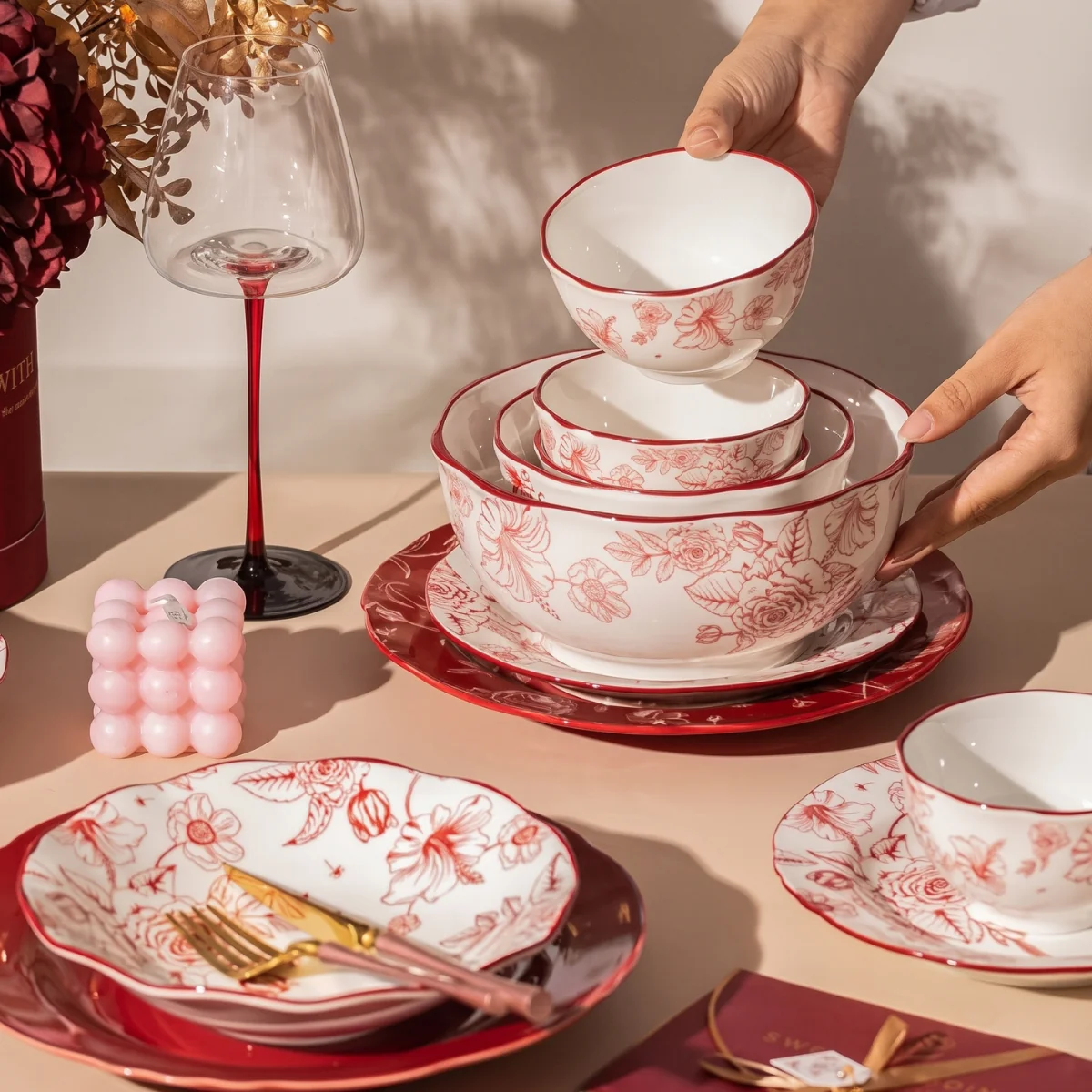
The most memorable holiday tables rarely match perfectly. A stack of plates in one pattern, a plain rim beneath it, a single color pulled through glasses and napkins: that is what makes a table look collected rather than bought in one afternoon. Mixing patterned and plain dinnerware is also the easiest way to stretch what you already own across Christmas dinner, a holiday brunch and New Year’s Eve. Here is how to do it so the result looks intentional, not accidental.
Why mix at all?
A full table in one busy pattern can feel heavy, especially once serving dishes, candles and greenery arrive. A full table of plain white can feel a little flat for a celebration. Pairing the two gives you contrast: the plain pieces let the pattern breathe, and the pattern gives the plain pieces a reason to be there.
Start with a calm base
Think of your plain dinnerware as the canvas. It usually goes on the bottom of the stack, as the dinner plate or a charger-style layer, because it fills the most space around each setting. A solid color with a little texture or a defined rim works better than a completely flat white, because it still has something to say when the patterned plate is cleared away after the first course.
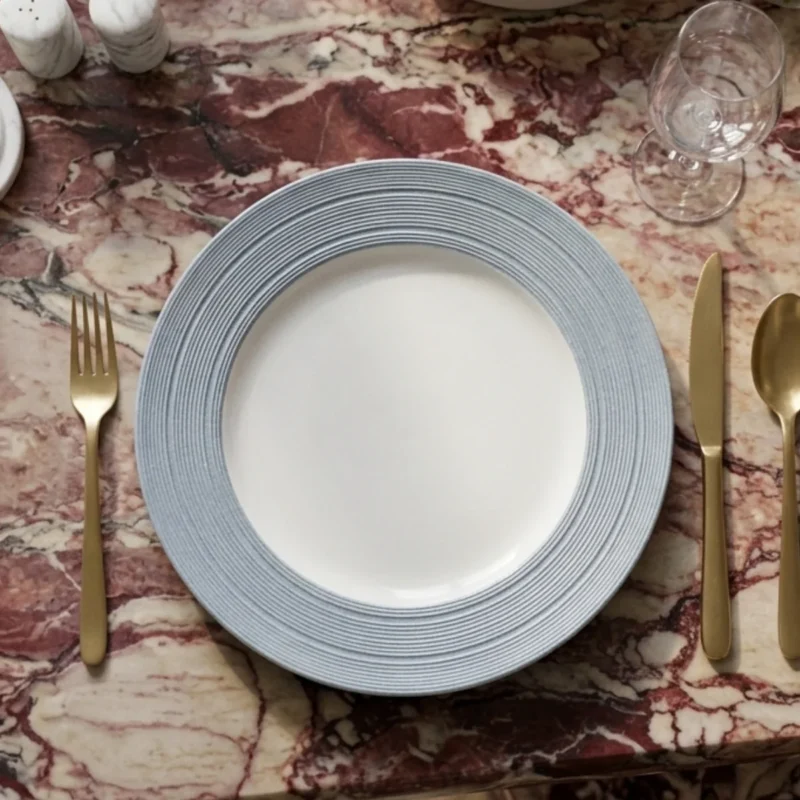
Our Linea Plate is a good example of this kind of base. It is a ceramic plate with a finely ridged rim, offered in six colors (Ardoise, Azure, Blanc, Noir, Rose and Vanilla) as a 10 inch dinner plate or an 8 inch salad plate. The ridges add quiet detail at the edge of the setting while the center stays clear for a patterned plate on top.
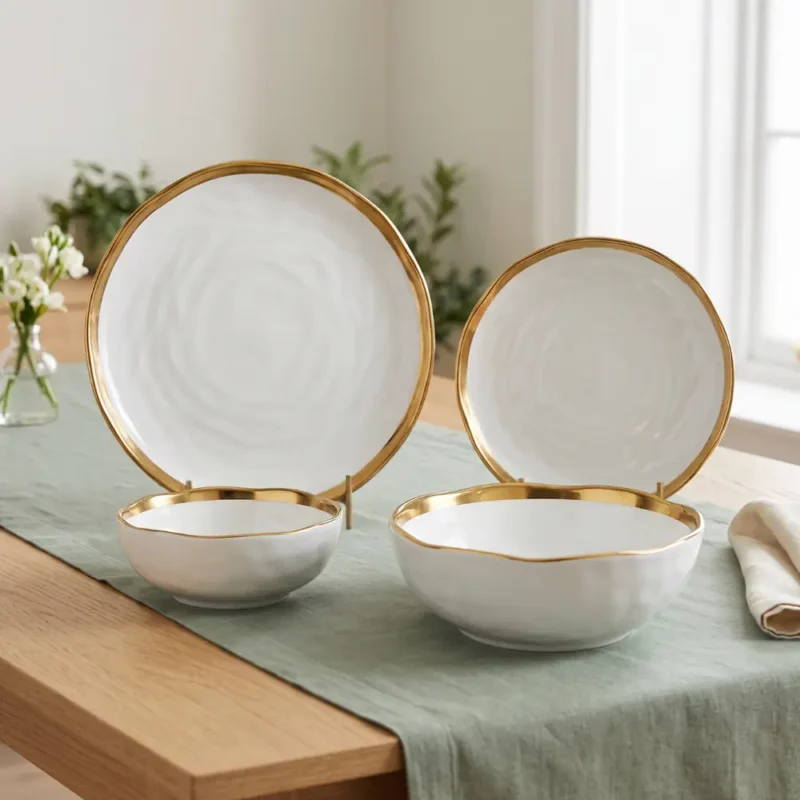
If you prefer a little shine, the Eclipse Plate pairs a softly wavy edge with a gold-tone rim, in Blanc or Noir. The gold line ties in neatly with gold cutlery and candlelight.
Choose one pattern to be the star
The simplest rule for mixing is to let one pattern lead. Pick the piece you love most and build around it, instead of trying to balance three equally loud designs. The lead pattern usually sits on top of the stack as a salad plate, or in the bowl, so guests see it first when they sit down.
For a classic red-and-white Christmas look, the new Roseraie Rouge Plate is an easy lead. It is a glazed porcelain plate with an all-over rose print in Rouge, available as an 8 inch salad plate, a 10 inch dinner plate or both together. Set the 8 inch size on top of a plain white or Vanilla dinner plate and the rose print reads as festive without taking over the whole table.
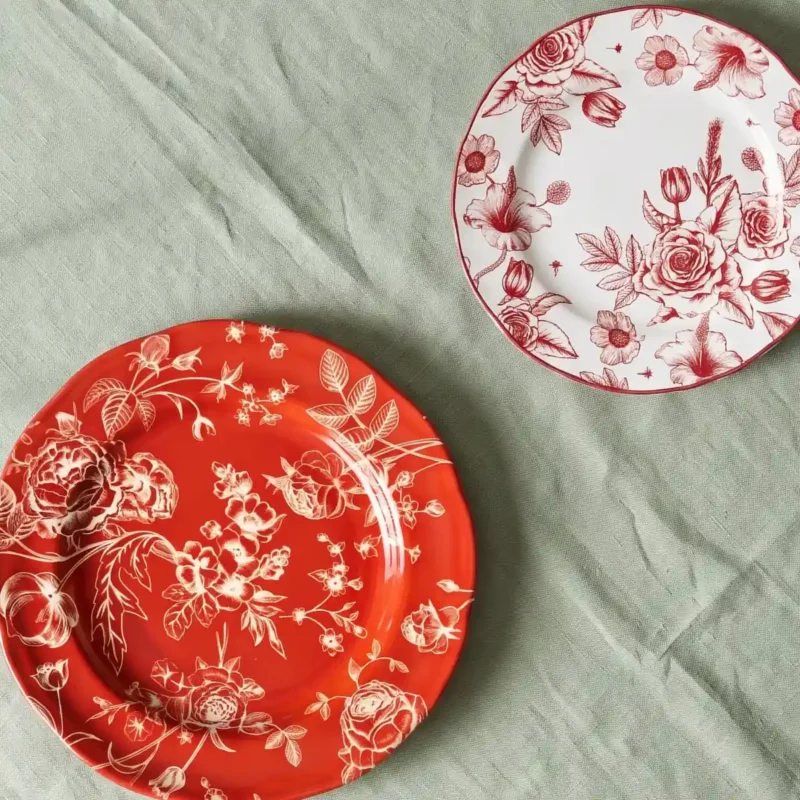
If you would like the whole look in one place, the Roseraie Rouge Dinnerware Set comes as a 5 piece set, or a 6 piece set that adds an 8 inch salad bowl.
Three ways to combine pattern and plain
Layer by course
Plain dinner plate on the bottom, patterned salad plate on top, and a bowl in either finish. This is the most foolproof method because every place setting looks the same, and the pattern disappears after the first course to leave a clean plate for the main dish.
Alternate the settings
Give every other guest a patterned plate and the rest a plain one. This works best on a long table where the rhythm is easy to see, and it is a smart solution when you own six patterned plates but are hosting twelve.
Mix several patterns in one color story
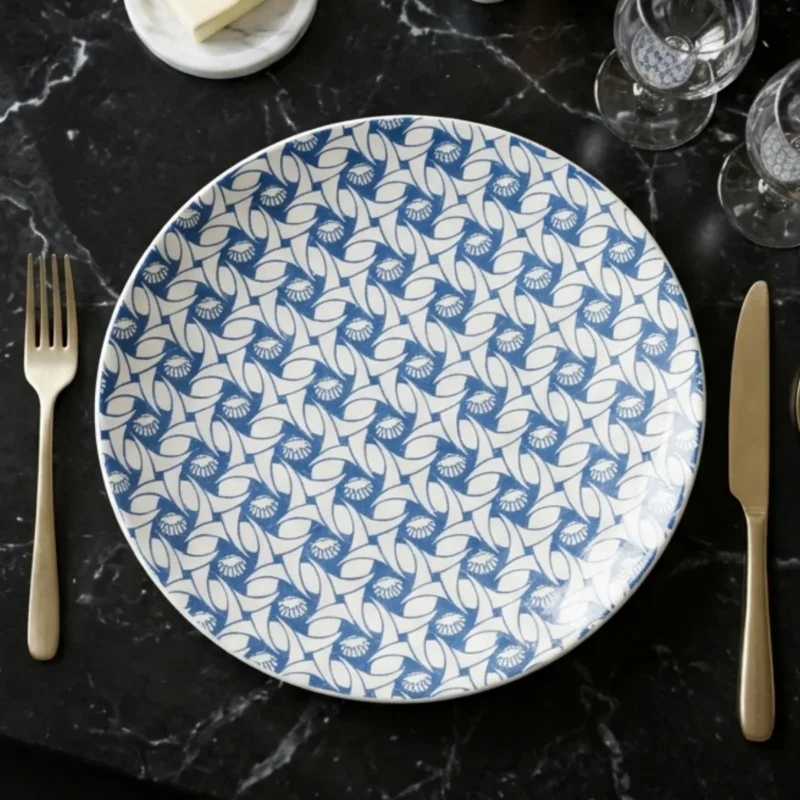
The more adventurous option: different patterns at each place, held together by one shared color. The Meridian Plate makes this easy. It is a printed ceramic plate offered in Bleu, Noir and Rouge, or all three as the Complete Collection, in flat or deep salad, luncheon and dinner sizes. A Rouge Meridian beside a Roseraie Rouge plate keeps the red thread running down the table, while a Bleu set pairs well with plain Azure or Blanc pieces for a wintry blue-and-white scheme.
Keep the palette tight
Pattern mixing goes wrong when there are too many colors competing. A good guide is two main colors plus one metallic. Some combinations that work well for the season:
- Red, white and gold. Roseraie Rouge on plain white, with gold cutlery and crystal. Classic Christmas without a single reindeer.
- Blue, white and gold. Meridian in Bleu or Linea in Azure with white, finished with gold-rimmed pieces. Calm and wintry, and it carries on into January.
- Black, white and gold. The Noir Deco Dinnerware Set, with its bold striped dinner plate and black salad plate with a gold-tone geometric design, alongside Eclipse in Noir or Blanc. Made for New Year’s Eve.
- Soft neutrals. The Ethereal Swirl Dinnerware Set, with its marble-swirl glaze in Mist Grey or Blush Pink, beside Linea in Vanilla or Rose for a gentler brunch table.
Mixing fine bone china with everyday pieces
Many people keep their best china for one or two dinners a year because a full set feels too formal for anything else. Mixing solves that. A few pieces from a richly decorated bone china set can sit on top of simpler ceramic plates, and the contrast makes the fine pieces look even more special.
The 24 piece plates and bowls sets from Karosa by Decor Aura are designed for a table of six, and each has a distinct personality: the Windsor set in deep navy with a fine gold lattice and raised scrollwork, the Marquise set in deep royal blue with gold lattice, and the Verona set in a soft mint pattern. All three are decorated with 24K gold. A Windsor or Marquise bowl on a plain Blanc or Azure plate is an easy way to bring them out more often, and the gold detailing links back to gold-rimmed plain plates like Eclipse.
Use bowls and glassware to bridge the gap
When plain and patterned pieces still feel a little separate, the in-between items pull them together. A patterned bowl on a plain plate, or a plain bowl on a patterned plate, connects the layers. The Roseraie Rouge Bowl, in a 4.5 inch dessert size or an 8 inch salad size, is a simple way to repeat the rose print at a setting built mostly from plain plates. The Eclipse Plates & Bowls Set works the other way, since each 4 piece set includes a dinner plate, salad plate, soup bowl and cereal bowl in a single plain finish.
Then repeat your metallic. Aurelle gold cutlery echoes gold rims on both plain and patterned plates, and clear crystal like the Lumière wine glass adds sparkle without introducing another color.
Common mistakes to avoid
- Too many leads. If every piece is patterned, nothing stands out. Keep at least one plain layer at each setting.
- Clashing undertones. A warm cream and a cool bright white side by side can make one of them look dull. Hold the plates together in daylight before you commit.
- A busy tablecloth. Patterned plates on a patterned cloth compete. Choose a solid linen, or a runner that picks up one color from your lead pattern.
- Forgetting scale. Pair a small, dense print with a bold, simple shape, or a large print with a fine ridge or rim. Two patterns of the same size tend to blur together.
Build it slowly
You do not need to buy a whole new table for the holidays. Start with a plain base in a color that suits your room, add one pattern you love this year, and another next season. Over time you will have enough pieces to set a different table for every occasion, all of them yours. Browse our plates, bowls and dinnerware sets to find your starting point.
New to Decor Aura? Take 10% off your first order when you join the Aura Insider list.
Bring the look home
Curated for the Aura of fine living.
Join the Aura Insider list and take 10% off your first order over $100.
← Back to the Journal